Thursday, March 22, 2012

Massage Therapy Coming More and More Into The Medical Forefront


click on the link below for the full article.
Don't Call It Pampering...


A version of this article appeared Mar. 13, 2012, on page D1 in some U.S. editions of The Wall Street Journal, with the headline: Don't Call It Pampering: Massage Wants to Be Medicine.

Wednesday, March 21, 2012


 Finals, Term Papers and Presentations Oh My!


Spent today with Berkeley students who where in the thick of finishing up semester's work. These hard working students were  taking a moment to distress themselves with a few minutes of chair massage, aromatherapy and the relaxing sounds of water falls.  It was well received and much needed! Keep up the good work guys!

Monday, March 19, 2012

A View Form The Other Side of Traumatic Brain Injury

Brain researcher Jill Bolte Taylor studied her own stroke as it happened -- and has become a powerful voice for brain recovery.

Why you should listen to her:

One morning, a blood vessel in Jill Bolte Taylor's brain exploded. As a brain scientist, she realized she had a ringside seat to her own stroke. She watched as her brain functions shut down one by one: motion, speech, memory, self-awareness ...
Amazed to find herself alive, Taylor spent eight years recovering her ability to think, walk and talk. She has become a spokesperson for stroke recovery and for the possibility of coming back from brain injury stronger than before. In her case, although the stroke damaged the left side of her brain, her recovery unleashed a torrent of creative energy from her right. From her home base in Indiana, she now travels the country on behalf of the Harvard Brain Bank as the "Singin' Scientist."
"How many brain scientists have been able to study the brain from the inside out? I've gotten as much out of this experience of losing my left mind as I have in my entire academic career."

Information currency of TED: Ideas worth spreading
visit at: http://www.ted.com/
A Moment Of Quiet
On Going Research In The Field of Massage Therapy


The Touch Research Institute has conducted over 100 studies on the positive effects of massage therapy on many functions and medical conditions in many different age groups. Among the significant research findings are enhanced growth (e.g. in preterm infants), diminished pain (e.g. fibromyalgia), decreased autoimmune problems (e.g., increased pulmonary function in asthma and decreased glucose levels in diabetes), enhanced immune function (e.g., increased natural killer cells in HIV and cancer), and enhanced alertness and performance (e.g., EEG pattern of alertness and better performance on math computations). Many of these effects appear to be mediated by decreased stress hormones. Several of these findings have been reviewed in the...(click for complete article)


Sunday, March 18, 2012

A Great Way to Go Lean and Green


I found this great veggie smoothie recipe. It's a little different, but I think it's a great way to get your greens in if your not always good about it.


Check out Nike Women on Facebook for more helpful hints on exercise, the latest products and more Click on   Nike Women.

Saturday, March 17, 2012

An Unexpected Gift


In February 2009, I was contacted by a long time client of mine. She had a friend who's daughter had suffered greatly from a traumatic brain injury. This client explained a little about the young women, how she had been a long time friend of the mother and how it grieved her to see the daughter in such a state. She said "Fran, I don't know if you could, if you would consider going to them and giving the daughter massage if I give it as a gift? I feel it maybe of help to her." I paused and thought a moment, then agreed. I was put in contact immediately with the family.

Being with incapacitated individuals was not new to me. I had worked for a few years in nursing homes as a Nursing Assistant and volunteered in hospice situations with massage therapy. One year prior I was fortunate to work with another case referred to me of a women who had suffered a stroke two years earlier. Her weekly session brought her physical comfort and a will to push herself in all that she was still capable of doing. Each case presents it self and in the evaluation as a therapist, I know where my limitations go; and yet in this and a similar one I have been awe struck.

Upon my arrival, it was explained to me how the family; on their own, had done alternative therapies such as acupuncture and at that present time physical therapy. This young women was not able to track with her eyes, vocalize, nor respond in anyway to conversations. No coordinated movements of any sort. They had been attempting to get responses with eye blinks or even hand squeezes but to little avail. No movement on her own at all. I explained what I would do and how I could help her (all while under my own breath praying for guidance). I then proceeded to set the mood for the first of many sessions to come. 

It is now 3 years later and I am happy to report that this young women has made tremendous progress. While she had been receiving physical therapy sessions, those soon after stop about close to a year after I began to work with her. I went from biweekly to weekly massage therapy sessions . During those 3 years we incorporated acupuncture again for a short period of time when I felt that my massage techniques had hit a road block. This aided in increasing the blood circulation to specific areas.


She has gone from being none communicative to laughing, smiling, enjoying the latest in gossip, even showing displeasure when she feels the need to. Physically, she had regain flexibility and movement in her arms,  released of restrictions in her neck and shoulders allow  more control over head movements and control of posture with ease.


What did I do? I used every massage strategy in my cache along with, common sense approach to body mechanics and a little intuitive touch. It is amazing to see how something so seemingly simple can bring about such dramatic results.


Why Did Thereaputic Massage Work?

We know the reflective response of Swedish massage releases endorfens which bring about a sense of calm and relaxation. Another major benifits of massage is blood CIRCULATION and regaining FLEXIBILITY. In order for our bodies to function properly we need good blood and lymph circulation. Blood transports nurishment to our organs and limbs while the lymphatic system carries away waste by products from our body on a systematic basis. In the case of a person who's body movements have been restricted due to illness, circulation becomes stagnanat. Muscle tissue can not receive nurishment, the body's metobolic waste can not be effectively flushed from the body. The result the body begins to atrophy and tissue begins to break down.

In this case as well as a second brain trauma both clients showed marked physical improvements with weekly massages.


Circulation was not only important to the limbs but has also played a part in mental awareness, impeded further skin break down, stimulated nerve responses and improved vocalization. Massage also brought about the flexibility needed to work limbs within their range of motion. It also released superficial and deep myofascial restrictions. These types of restrictions not only cause immobility but pain. Myofascial releases have been a great key to their improvements. 

Overall, it is without a doubt that we can certainly prove, massage is not just about distressing; but holds therapeutic value in recovery efforts after catastrophic illness.


Writen by Frances Dunston, LMT
Frances is a trained licensed massage therapist in Brooklyn, New York. She holds her New York State License in Massage therapy with focus on medical and restorative massage techniques. Frances utilizes her experience from neuro-muscular massage, sports therapy, and Shiatsu energy modalities. She can be contacted via email: fusiontherapywellness@gmail.com 

Wednesday, March 07, 2012


Let's Set The Record Straight


It has sadly come to my attention through my association that Lifetime television is currently airing a show called the CLIENT LIST which protrays massage therapy to include inappropriate sexual contact.


This is just one more slap in the face to Licensed Massage Therapist practicing within the guides of a Health Professional. It is sad that in this day and age of what we know about the profession of massage, that we have to still combat this misnomers about our profession.


In my years of practice, I too have been asked in the most subtlest of ways about helping to ease the  fictional "upper groin or thigh pain". Which seems to be the new code for sexual contact.


I take this as a personal attach on something I truly dedicate myself to. My clients not only come to distress from hectic lives; they are grandmothers with arthritis, traumatic brain injured clients, expectant mothers, persons with chronic pain, travelers unwinding after long flights, or recovering from surgeries. It is an insult to be contrasted along side with what this show represents.

I have know even my male counter parts to state they are approached by other men for this purpose or inappropriate sexual contact. So much so that one even gave up his practice to refocus on his career in housing rehab work. This leaves him still to pay a school bill of well over $29,000 for his unused education.


I have had other respectable female therapist be propositioned at the end of a therapy session that was screened by the company she worked for the provide on-site therapy sessions. When does it end? 


Well here's your chance to voice your opinion. If you value what massage therapy has done for your health and well being, please click on the link and sign the petition as I did to have this show pulled off the air.


Women's Rights Petition: Lifetime Television


Wednesday, February 01, 2012

SERVICE IMPROVEMENTS 101


In an effort to give you better service, I am in the process of making small improvements to assist you in getting the best quality service that is tailored to your person need. 

Current clients, please bear in mind some changes will take getting adjusted to or they may not effect you at all.   
 
The ultimate goal is to deliver you the best service that is just the right fit for you!


Thank you for your patience and your patronage.


Frances L. Dunston, LMT


Monday, January 09, 2012

In the rocky desert of Israel for a two day retreat. Silence was never so good.
Stepping Off The Wheel For A Bigger View

As I travel road down the path of life, I slowly get reminders that  there is more to life than meets the eye.  My recent trip to Israel certainly was the thing that gave me a fresh prospective. I made this my "personnel self discovery tour".

It is always a good idea to find a way to get off the road that may be leading you through the same mazes and tunnels of life you have somewhat  grown accustom to. It is nice to every once in a while, derail and take perspective of where you are at this present moment and where you have come from. YOU might be surprise at all you have accomplished. You may be dishearten at your supposed short comings. Wherever you are, take a moment to survey your land. Take stock in the here and now before you move onto your next adventure.
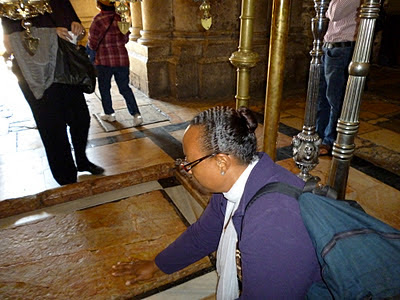
Sacred space. At Calvary, the Crucifixion site of Jesus. Here we touch the stone where his body was prepared for the tomb.

We can only strive to use all that we have been endowed with to complete our individual missions in life.  Now, we ought not to look at this as Mission Impossible; but as a road trip with continuously changing scenery. Scenery that we can modify when needed to move forward. The fact of the matter is to remember when you are tired of the land scape...

At the Wailing Wall, in Israel


you are your own greatest artist CHANGE IT. Change to water color or pastels whatever your choosing. But the thing to remember is that there is always and has always been a choice to exam and get the best out come for YOU.


Monday, August 15, 2011

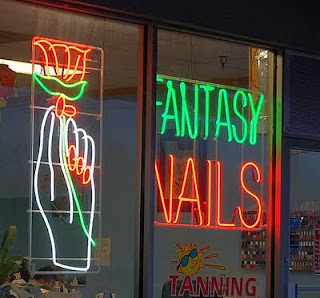
Are Nail Technicians Massage Therapist?

Your sitting in your local nail salon about to have a little "me time", when you glance over and see a hand written sign posted:

CHAIR MASSAGE 10 min. $10.00
                                20 min. $20.00

BACK MASSAGE   30 min. $30.00
REFLEXOLOGY       $1.00 per min. 

Your about to have your eyebrows waxed, your nails done, "Why not", you think to yourself, "One stop shopping and besides my neck and shoulders are killing me!" 

Let me ask you this question, would you go to a massage therapist for a manicure and pedicure? Obviously the answer would be, NO, not unless you know they were trained to do one. The idea that we do not bother to question the owner or the technician about their background in this case, is always amazing to me. 

Nail technicians are not trained in the Profession of Massage Therapy. Yet many sit on that massage chair every week, allowing someone that is unlicensed to practice massage therapy, to touch their body. Granted the salons knowingly conduct the farce everyday, and sometimes unbeknowest to the customer.

What's the big deal?
It  is ILLEGAL. 
New York State requires therapist applying for licensure to complete 1,000 hours of classroom eduction and hands on training. 1,000 hours, and in addition sit a state examination. It is now also required for massage therapist to complete mandatory continuing education work to maintain their license. Additionally, many places that hire therapist require Professionals have CPR certification and carry their own liability insurance.

It's just a rub down, there can't be that much in training.
Course work covered in any accredited massage school program covers the following course work:

Anatomy and Physiology 
Biology
Kinesology
Ethics
Infection Control Procedure
Pathology
Neurology
Myology
First Aid and CPR
Draping procedure 
and massage techniques such as 
Shiatsu
Chair Massage
Prenatal Massage
Sports Massage
Classic Swedish
Neuromuscular massage (not all programs)
Medical massage

You can Read more by following the link to the office of Professional Services of the NYS Education department. 

OK then, want about the hand and foot massage I get during my manicure and pedicure? 

Within the scope of practice, a light lotion massage is part of a manicure or pedicure service, as the state would classify for beautification, this also applies to barbers. But would you go to your local barber and get a massage? I don't think so. This does not qualify them to do chair massage, back massage or Swedish massage.

How do you know if in fact your local nail salon has indeed hired a licensed therapist?
Just as your local nail salon post their business license, and license as a nail technician at the front of the store,  licensed massage therapist are required to display their certificate which shows both their license number and certificate number the same way.

You place your well being at risk any time you opt for one of these chair massages and it is ILLEGAL.  

TRUE STORY:
I had a recent case where a new client came in and shared that on occasion she opted for a chair massage at a well known local nail salon. "Everyone there is always nice." she said. She was so knotted up from working on her computer day in and day out her shoulders seemed like bricks she said.

The harder the massage the better, right? Well, during her ten minute massage, the young nail tech doing the massage, kept running the bony part of her elbow very close to and  sometimes on top of her spine. It seemed, ok, she thought at the time, but did not stop the girl thinking she knew what she was doing and she was already in alot of discomfort. So this had to be good for her. So she believed.

The client said the next two or three days after the chair massage at the salon, she felt worse than when she went in. It was horrible.

A trained therapist would know how to execute the right pressure and utilize the right technique in order to bring about the desired results. If there were to be any discomfort after the session, because there had to be friction massage applied for instance, the client would be told that and how to address it.

It is simple, buyer... BEWARE. If you take time to read how many calories are on a package before you consume it; It should stand to reason you take a moment to check this little detail out for yourself too.


Frances Dunston, LMT
lic# 27 021443


Friday, July 22, 2011

Creamy Romaine Salad
Prep and Cook Time: 15 minutes Ingredients:
  • 2 medium heads romaine lettuce, outer leaves discarded
  • 1 bunch young dandelion greens, if available
  • 1 medium tomato cut into eighths
  • Dressing
  • 3 TBS chopped fresh basil
  • 3 medium cloves garlic, pressed
  • 1 TBS prepared Dijon mustard
  • 1 TBS honey
  • 1/2 tsp salt
  • 1/2 tsp cracked black pepper
  • 4 TBS fresh lemon juice
  • 1/4 cup sunflower seeds
  • 4 oz silken tofu
  • 2 TBS extra virgin olive oil
  • *a little water to thin if needed
Directions:
  1. Blend all dressing ingredients in blender adding olive oil a little at a time at end.
  2. Chop, rinse, and dry romaine lettuce and dandelion greens. If you have a salad spinner it is best. If not, pat rinsed greens with paper towels so dressing doesn't get diluted.
  3. Toss greens with tomato and desired amount of dressing.
Serves 4 Printer Friendly Version of Creamy Romaine Salad
In-Depth Nutritional Profile for Creamy Romaine Salad


Today's recipe is courtesy of www.http://whfoods.org

Tuesday, July 19, 2011

Coping With the Symptoms of Menopause

Walking into this new phase of life, you wonder if you are alone in what your feeling. Am I falling apart, going crazy, ridden with some mystery disease that my doctor's can't seem to recognize yet? What is it? Well friends it is our other girl friend down the end - pre-menopause and her sister menopause.
 
Not all women experience menopause in the same way. For some, menopause can bring on an array of uncomfortable symptoms. Others may experience few discomforts and are happy to no longer have periods.

In an effort to let you know you do not stand alone in this new phase of your womanhood, I have pulled some interesting finding together to help you ease your suffering. 

Relieving hot flashes

  • Identify and avoid your hot flash "triggers." Common triggers include stress, caffeine, alcohol, spicy foods, tight clothing, heat and cigarette smoke.
  • Keep the bedroom cool. Use fans during the day. Wear light layers of clothing.
  • Try deep, slow abdominal breathing (6 to 8 breaths per minute). Practice deep breathing for 15 minutes in the morning, 15 minutes in the evening and at the onset of hot flashes.
  • Exercise daily. Walking, swimming, dancing and bicycling are good choices.
  • Try taking vitamin E supplements (400 international units [IUs] twice a day) and ibuprofen (Motrin, Advil, Nuprin) at bedtime. Note: Do not take ibuprofen and aspirin together.
  • Consider adding soy protein (40 to 60 mg) to your diet daily.

Relieving insomnia

  • Keep the bedroom cool to prevent night sweats.
  • Avoid using sleeping pills.
  • Exercise daily.
  • Avoid caffeine and alcohol at night.
  • Take a warm bath or shower at bedtime.
  • Eat cereal and milk products at bedtime or during the night. (Avoid products that contain caffeine.)

Coping with mood swings, fears, and depression (including suicidal thoughts)

  • Find a self-calming skill to practice, such as yoga, meditation or slow, deep breathing.
  • Engage in a creative outlet that fosters a sense of achievement.
  • Stay connected with your family and community; nurture your friendships. It is especially important to connect with other female friends and share what you are experiencing. It does bring a sense of comfort.
  • Other symptoms some women experience in poor memory over muzzy thinking. A feeling of being stuck and not being able to focus on tasks. Supplementation and diet can help ease this.

Relieving painful intercourse

  • Try using a vaginal water-based moisturizing lotion or lubricant during intercourse.

Preventing osteoporosis

On the side of medical advice received we need to consider supplementation.

  • Calcium can slow bone loss and may decrease fractures. Consume 1,500 milligrams of calcium a day. Good sources of calcium are calcium supplements such as Tums; fruit juices and breads; low-fat dairy products; green leafy vegetables such as broccoli, kale and spinach greens; almonds; and soy milk.
  • Vitamin D aids in the absorption of calcium and stimulates bone formation. Consume 800 to 1,000 IUs of vitamin D3 a day.
  • Eat foods low in sodium, low in animal protein and low in caffeine.
  • Bone mass is built before menopause as a result of exercise, diet, and genetics. Exercises that increase bone mass make the muscles work against gravity. Walking and muscle-building exercises may reduce bone loss and fractures and improve balance.

Preventing heart disease

  • Eat a variety of vegetables, fruits, and whole grains such as quinoa.  Limit salt, cholesterol, and fat, especially animal fat.
  • Get at least 30 minutes of moderate exercise over the course of each day. Many activities increase the heart rate, including gardening, walking, dancing, and aerobic exercises. The activity period does not need to be continuous.
  • Don't smoke.
  • Maintain a healthy weight.
  • Follow your health care provider's instructions for controlling high blood pressure, diabetes, and cholesterol.
  • Take one baby aspirin daily, if approved by your physician if over age 65. Note: Do not take ibuprofen and aspirin together.
Food as Medicine
  • Macafem - herbal hormone balancer  Note: Not to be used with other HRT
  • Soy foods. The isoflavones in soy foods help balance hormone levels and have some estrogenic activity. There is ongoing research about the safety and efficacy of isolated soy isoflavone supplements. While the initial results look promising, we currently recommend using natural soy foods rather than supplements. Choose from tofu, soy milk, roasted soy nuts or tempeh.
  • Flaxseed. Substances called lignins in flaxseed are important modulators of hormone metabolism. Grind flaxseed daily in a coffee grinder at home and use 1 to 2 tablespoons a day.
  • Dong quai. Dong quai (Angelica sinensis) is known both in China and the West for its ability to support and maintain the natural balance of female hormones. It does not have estrogenic activity. This is one of the herbs for menopause that should not be taken if a woman is experiencing heavy bleeding.
  • Black cohosh (Cumicifuga racemosa). One of the best-studied traditional herbs for menopause, black cohosh is used to help alleviate some symptoms of menopause, including hot flashes. Black cohosh seems to work by supporting and maintaining hormonal levels, which may lessen the severity of hot flashes. Many women report that the herb works well but it isn't effective for everyone. While any therapy that influences hormonal actions should be a concern, black cohosh does not appear to have estrogenic activity and thus may be safe for women with a personal or family history of breast cancer.
  • Vitamin E. A daily dose of 400 IUs of natural vitamin E an antioxidant (as mixed tocopherols and tocotrienols) along with C can help alleviate symptoms of hot flashes in some menopausal women. 
  • B vitamins. This group of water-soluble vitamins may help women deal with the stress of menopausal symptoms.
  • Evening primrose oil or black currant oil. These are sources of gamma-linolenic acid (GLA), an essential fatty acid that can help influence prostaglandin synthesis and help moderate menopausal symptoms.
  • Again a health diet of whole grains such as  , fruit and veggies helps. 
  • Curb you sweet tooth with Agave syrup, stevia or Truvia (trade name)

Peri-menopause and the final stage menopause is just another transition in life. We can walk gracefully into it. Working with ourselves in a loving fashion can make all the difference in the world with how you see your world and how the world sees you.

Friday, March 11, 2011

What is a groin pull?
A groin pull is an injury to the muscles of the inner thigh. The groin muscles, called the "adductor muscle" group, consists of six muscles that span the distance from the inner pelvis to the inner part of the femur (thigh bone). These muscles pull the legs together, and also help with other movements of the hip joint. The adductor muscles are important to many types of athletes including sprinters, swimmers, soccer players, and football players.
What happens to the muscle with a groin pull?
A groin pull is an injury to the adductor muscles called a muscle strain. When a muscle is strained, the muscle is stretched too far. Less severe strains pull the muscle beyond their normal excursion. More severe strains tear the muscle fibers, and can even cause a complete tear of the muscle. Most commonly, groin pulls are minor tears of some muscle fibers, but the bulk of the muscle tissue remains intact.
What are the symptoms of a groin pull?
An acute groin pull can be quite painful, depending on the severity of the injury. Groin pulls are usually graded as follows:
  • Grade I Groin Strain: Mild discomfort, often no disability. Usually does not limit activity.
  • Grade II Groin Strain: Moderate discomfort, can limit ability to perform activities such as running and jumping. May have moderate swelling and bruising associated.
  • Grade III Groin Strain: Severe injury that can cause pain with walking. Often patients complain of muscle spasm, swelling, and significant bruising.
Groin pulls are often seen in athletics who participate in sports such as ice hockey and soccer. The injury appears to be related to factors including hip muscle strength, preseason conditioning, and previous injury. Because of this, proper conditioning is of utmost importance to prevent the occurrence of a groin strain injury. Athletes, especially hockey and soccer players, should incorporate adductor strengthening, pelvic stabilization, and core strengthening exercises into their workouts to prevent the occurrence of a pulled groin. What other problems can cause similar symptoms?
A pulled groin is usually a clear diagnosis. Most athletes know what the injury is before they seek medical attention. However, other conditions can mimic the symptoms of a groin strain.
One condition that was previously not well recognized is called a sports hernia. Sports hernias have been found in patients who were diagnosed with chronic groin strains. The sports hernia is a condition similar to a regular inguinal hernia, and is due to a weakening of the muscles that form the abdominal wall. The symptoms of a sports hernia are often nearly identical to those of a groin strain. For more information:
 Other conditions that may mimic the symptoms of a groin strain include osteitis pubis (inflammation of the pubic bone), hip joint problems (including early arthritis, labral tears, and other conditions), and low back problems (pinched nerves). When do I need to see a doctor for a groin pull?
If you have symptoms of a severe groin pull, you should be evaluated for proper treatment. Some signs of a severe groin strain include:
    • Difficulty walking
    • Pain while sitting or at rest
    • Pain at night
Severe groin pulls should be evaluated because in some very rare situations of complete muscle rupture, surgery may be necessary to reattach the torn ends of the muscle. This is rarely needed, even in patients with Grade III groin strain injuries, as these patients can usually undergo successful non-operative treatment. If you are unsure if you have a groin pull or the symptoms do not quickly resolve, then you should be seen by your doctor. As described above, other conditions can be confused with a groin pull, and these should be considered if your symptoms do not resolve. Once a strain is diagnosed, you can begin treatment for your groin pull.
Treatment of a groin pull is usually guided by the severity of the injury. Resting a groin pull is the key to successful treatment. As a general rule of thumb, if you have a groin pull, you can do activities that don't aggravate your injury. You should rest until you are pain free to allow the injured muscle to heal. Resting inadequately may prolong your recovery.
The following are the common treatments used for groin strains:
  • Rest
    It is important to rest following the injury to allowed the injured muscle to properly heal. Allow pain to guide your level of activity; this means that activities which cause symptoms should be avoided.
  • Stretching
    Gentle stretching is helpful, but it should not be painful. Stretching excessively can be harmful and slow the healing process.
  • Ice the Injury
    Apply ice to the injured area in the acute phase (first 48 hours after injury), and then after activities. Ice will help calm the inflammatory response and stimulate blood flow to the area.
  • Heat Applications
    Before activities, gentle heating can help loosen the muscle. Apply a heat pack to the groin prior to stretching or exercising. As a general rule of thumb, remember to heat before, and ice after.
  • Anti-inflammatory Medications
    Oral anti-inflammatory medications (such as Ibuprofen, Aleve, or Motrin) can help relieve symptoms of pain and also calm the inflammation.
  • Physical Therapy
    Physical therapists can be helpful in guiding treatment that may speed your recovery. Some people find modalities such as ultrasound, therapeutic massage, and specific exercises particularly helpful. You should see your physician to determine if these would be appropriate for your condition.
What can be done to prevent groin strains?
New research is shedding light on factors that can be helpful in preventing groin injuries. Competitive athletes who participate in soccer, ice hockey, or similar sports that are prone to groin injuries should focus some energy on groin injury prevention. Exactly what exercises and stretches are most important in still being worked out, but some suggestions for groin injury prevention include:
Together, these exercises and stretches can help control the movements of the hip and pelvis, and hopefully prevent many groin strains. Sources:

Pulled Hamstring / Hamstring Strain

What is a pulled hamstring / hamstring strain?


The hamstring muscle is a group of large, powerful muscles that span the back of the thigh, from the lower pelvis to the back of the shin bone. The hamstring is the important muscle that functions to extend the hip joint and flex the knee joint.
The hamstring is used in many sporting activities, as well as normal daily activities. Sports that commonly cause a hamstring injury are sprinting sports that involve sudden accelerations. These include track and field, soccer, and basketball.
A hamstring injury can also occur as a result of a direct blow to the muscle, such as being kicked in the back of the thigh, or falling on the back of the thigh. Hamstring contusions are different from pulled hamstrings, although they may cause similar symptoms.


What is a pulled hamstring?

A pulled hamstring, also called a hamstring strain, is a tear of the hamstring muscle fibers. In less severe hamstring strains, Grade I injuries, the tearing is microscopic. The muscle fibers are essentially stretched too far, and some bleeding occurs within the muscle. In very severe hamstring strains, severe Grade III injuries, the hamstring muscle can completely rupture, and may require surgery to repair the torn ends of the muscle.

Muscle strains and tears most commonly occur because of what is called an "eccentric contraction." When this occurs, the muscle is trying to contract while another force (the ground, another player, etc.) is forcing the muscle in the opposite direction. This creates tremendous force on the muscle, and if the force is strong enough, it will tear the muscle fibers.

What are the symptoms of a pulled hamstring?

The symptoms of a pulled hamstring depend on the severity of the injury. The hamstring injury is usually sudden and painful. Other common symptoms include:
  • Bruising: Small tears within the muscle cause bleeding and subsequent bruising. The bruise begins in the back of the thigh, and as time passes the bruise will pass down below the knee and often into the foot.
  • Swelling: The accumulation of blood from the hamstring injury causes swelling of the thigh. This can make further muscle contraction difficult and painful. Wearing a compressive bandage can help control the swelling.
  • Spasm: Muscle spasm is a common and painful symptom of a hamstring injury. Because of the trauma to the muscle, signals of contraction are confused, and the muscle may be stimulated. If severe, muscle relaxants can help with spasms.
  • Difficulty Contracting: Flexing the knee is often painful after a pulled hamstring, and can even prevent the patient from walking normally. If you are unable to contract the hamstring, the muscle may be completely ruptured.

What is the treatment of a pulled hamstring?

The immediate treatment of any muscle injury consists of the RICE protocol - rest, ice,compression, and elevation (never apply ice directly to the skin). This is aimed at reducing the bleeding and damage within the muscle tissue. Resting may be the common sense approach, but it is one that is often ignored by competitive athletes. This is unwise, since it does not take much to turn a grade one strain into a grade two, or a grade two strain into a grade three. As a general rule, grade one hamstring strains should be rested from sporting activity for about 3 weeks and grade two injuries for about 4 to 6 weeks. In the case of a complete rupture, the muscle will have to be repaired surgically and the rehabilitation afterwards will take about 3 months. Regardless of the level of the injury the treatment in the first five days is the same. The hamstring should be rested in an elevated position with an ice pack applied for twenty minutes every two hours, if practical (never apply ice directly to the skin). A compression bandage should be applied to limit bleeding and swelling in the tissues. After the first five days have been spent resting, more active rehabilitation can be started. Crutches may be necessary if walking is painful or if spasms are severe. If the pain is significant, or if the symptoms do not steadily resolve, medical evaluation should be obtained.


Grade 1

Sensation of cramp or tightness and a slight feeling of pain when the muscles are stretched or contracted.

Grade 2

With a grade two hamstring strain there is immediate pain which is more severe than the pain of a grade one injury. It is confirmed by pain on stretch and contraction of the muscle.

Grade 3

A grade three hamstring strain is a severe injury. There is an immediate burning or stabbing pain and the athlete is unable to walk without pain. The muscle is completely torn and there may be a large lump of muscle tissue above a depression where the tear is. After a few days with grade two and three injuries a large bruise may appear below the injury site caused by the bleeding within the tissues.

Courtesy of sportlink.co.uk

Friday, February 18, 2011


 Refreshing Carrot Juice Recipe


Ingredients:
8 Large Fresh Cleaned Carrots
1/2 Inch Of Fresh Ginger
2 Large Fresh Granny Smith Green Apples
1 Large Fresh Mint Sprig (Optional Garnish)

Information:
Serving Size 1
211 Calories Per Serving
0 Grams Of Fat

Preparation Instructions:
To begin this wonderful apple ginger carrot juice recipe, you will first want to take out your juicer. If your juicer has been stored away for a long period of time, be sure to inspect it for dust, and then sterilize it where necessary. Next take your eight carrots, and thoroughly wash and rinse them under cool running tap water. Moving forward, you will next want to wash and rinse your apples, and then quarter them with a sharp kitchen knife. Repeating the previous task, you will finally want to wash and rinse the small piece of ginger. You can use a larger piece of ginger if you want to, but any more than a half inch will really create an extremely strong ginger flavor. Now that your produce is ready, place a tall glass under the juice spout, and slowly begin feeding in all of your fresh ingredients. Depending on how moist your carrots and apples are, you may want to adjust your proportions accordingly. Once your juice is finished, give it a quick stir to


Saturday, September 25, 2010

Vital Signs

Regimens: Massage Benefits Are More Than Skin Deep

Does a good massage do more than just relax your muscles? To find out, researchers at Cedars-Sinai Medical Center in Los Angeles recruited 53 healthy adults and randomly assigned 29 of them to a 45-minute session of deep-tissue Swedish massage and the other 24 to a session of light massage.

All of the subjects were fitted with intravenous catheters so blood samples could be taken immediately before the massage and up to an hour afterward.
To their surprise, the researchers, sponsored by the National Center for Complementary and Alternative Medicine, a division of the National Institutes of Health, found that a single session of massage caused biological changes.
Volunteers who received Swedish massage experienced significant decreases in levels of the stress hormone cortisol in blood and saliva, and in arginine vasopressin, a hormone that can lead to increases in cortisol. They also had increases in the number of lymphocytes, white blood cells that are part of the immune system.
Volunteers who had the light massage experienced greater increases in oxytocin, a hormone associated with contentment, than the Swedish massage group, and bigger decreases in adrenal corticotropin hormone, which stimulates the adrenal glands to release cortisol.
The study was published online in The Journal of Alternative and Complementary Medicine.
The lead author, Dr. Mark Hyman Rapaport, chairman of psychiatry and behavioral neurosciences at Cedars-Sinai, said the findings were “very, very intriguing and very, very exciting — and I’m a skeptic.”

Friday, July 02, 2010


Neck Pain; Where Does It Come From?

There are many common causes of neck and shoulder pain.  The most most common is that of strain. Constant hours sitting at a computer typing, carrying heavy bags on one side sometimes and over zealous work out can be the culprit. But you don't have to suffer needlessly. There are some simple self help exercises you can do at anytime to minimize your risk. 

Do these exercises only if you do not have pain or numbness running down your arm or into your hand. The first 6 exercises are meant to help your neck remain flexible. Do not do any exercises that make your neck pain worse.
  • Active neck rotation: Sit in a chair, keeping your neck, shoulders, and trunk straight. First, turn your head slowly to the right. Move it gently to the point of pain. Move it back to the forward position. Relax. Then move it to the left. Repeat 10 times.
  • Active neck side bend: Sit in a chair, keeping your neck, shoulders, and trunk straight. Tilt your head so that your right ear moves toward your right shoulder. Move it to the point of pain. Then tilt your head so your left ear moves toward your left shoulder. Make sure you do not rotate your head while tilting or raise your shoulder toward your head. Repeat this exercise 10 times in each direction.
  • Neck flexion: Sit in a chair, keeping your neck, shoulders, and trunk straight. Bend your head forward, reaching your chin toward your chest. Hold for 5 seconds. Repeat 10 times.
  • Neck extension: Sit in a chair, keeping your neck, shoulders, and trunk straight. Bring your head back so that your chin is pointing toward the ceiling. Repeat 10 times.
  • Chin tuck: Place your fingertips on your chin and gently push your head straight back as if you are trying to make a double chin. Keep looking forward as your head moves back. Hold 5 seconds and repeat 5 times.
  • Scalene stretch: This stretches the neck muscles that attach to your ribs. Sitting in an upright position, clasp both hands behind your back, lower your left shoulder, and tilt your head toward the right. Hold this position for 15 to 30 seconds and then come back to the starting position. Lower your right shoulder and tilt your head toward the left until you feel a stretch. Hold for 15 to 30 seconds. Repeat 3 times on each side.
  • Isometric neck flexion: Sit tall, eyes straight ahead, and chin level. Place your palm against your forehead and gently push your forehead into your palm. Hold for 5 seconds and release. Do 3 sets of 5.
  • Isometric neck extension: Sit tall, eyes straight ahead, and chin level. Clasp your hands together and place them behind your head. Press the back of your head into your palms. Hold 5 seconds and release. Do 3 sets of 5.
  • Isometric neck side bend: Sit tall, eyes straight ahead, and chin level. Place the palm of your hand at the side of your temple and press your temple into the palm of your hand. Hold 5 seconds and release. Do 3 sets of 5 on each side.
  • Head lift: Neck curl: Lie on your back with your knees bent and your feet flat on the floor. Tuck your chin and lift your head toward your chest, keeping your shoulders on the floor. Hold for 5 seconds. Repeat 10 times.
  • Head lift: Neck side bend: Lie on your right side with your right arm lying straight out. Rest your head on your arm, then lift your head slowly toward your left shoulder. Hold for 5 seconds. Repeat 10 times. Switch to your left side and repeat the exercise, lifting your head toward your right shoulder.
  • Neck extension on hands and knees: Get on your hands and knees and look down at the floor. Keep your back straight and let your head slowly drop toward your chest. Then tuck your chin slightly and lift your head up until your neck is level with your back. Hold this position for 5 seconds. Repeat 10 times.
  • Scapular squeeze: While sitting or standing with your arms by your sides, squeeze your shoulder blades together and hold for 5 seconds. Do 3 sets of 10.
Written by Tammy White, MS, PT, and Phyllis Clapis, PT, DHSc, OCS, for RelayHealth.
What is a reflexology?
by Dr Apoorva Shah
Reflexology is a science that deals with the principle that there are reflex areas in the feet and hands, which correspond to all of the glands, organs and parts of the body. One theory, with acceptance in the Reflexology universe, refers that Reflexology was born in China about 5.000 years ago, although evidences are uncertain. However, Egyptian and Babylonian cultures were around before the Chinese; and Egypt as contributed (with a historical evidence, found in diggings) a document (pictogram) dated of 2,500 - 2,350 BC that describes the practice of Reflexology.
It seems that there isn't doubts about the existence of a strong relation between Reflexology and Acupuncture, both based in similar ideas, that means in energetic and meridian therapies, in the way that propose the idea of energy lines linking the hands and feet to several parts of the body. This means that working on the reflex zones can heal the whole body. Reflexology is a unique method of using the thumb and fingers on these reflex areas.
What is a reflexology chart?
In a reflexology chart, the body is reflected on the feet or hands. It serves as a map for a practitioner to target health goals.
  • Left foot or hand reflects the left side of the body and the right foot or hand the right side.
  • The spine reflex area runs down the insides of the feet and hands.
  • The reflex areas for the arm and shoulder are reflected toward the outside of the foot or hand.
  • The toes and fingers mirror the head and neck as well as the parts of the body they encase.
  • The ball of the foot mirrors the chest and upper back in addition the heart and lungs.
  • Halfway down the foot at the base of the long bones of the foot is represented the waistline of the body. the parts of the body above the waistline are mirrored above this line and those below are represented below it.
  • Internal organs lying above the body's waistline are reflected by reflex areas above this line while those below the waistline are mirrored below this line.
What are the benefits of reflexology?


In general terms the benefits of reflexology have to do with the reduction of stress. Because the feet and hands help set the tension level for the rest of the body they are an easy way to interrupt the stress signal and reset homeostasis, the body's equilibrium.
The benefits of reflexology include:
  • Relaxation
  • Pain reduction
  • Rejuvenation of tired feet
  • Improvement in blood flow
  • To relieve stress and tension
  • To improve blood supply and promote the unblocking of nerve impulses
  • To help nature achieve homeostasis
Contra indication for reflexology
It is not advisable to have reflexology if you have:
  • A contagious or acute infectious disease e.g. dermatitis / eczema / psoriasis
  • High fever
  • Had recent surgery of malignant tumour
  • Foot wounds, burns or infection
  • Deep vein thrombosis / phlebitis
  • Pregnancy (treatment should be done with caution to certain reflexes and caution should be taken particularly in the early stages of pregnancy)

Monday, May 31, 2010


Frances giving chair massage at local gallery event  


Make Chair Massage Part of Your Next Event

work place, bridal shower, birthday party, spa day, book club meetingsteacher's appreciation, staff development day, nurse appreciation, customer appreciation

  10 mins. can dramatically make all the difference! 

Convenient and affordable chair massage can make for a memorable gathering.

For rate information, available times and dates please write:
fusiontherapyspa@gmail.com
or call direct (917) 417-5761